
Connect Regularly
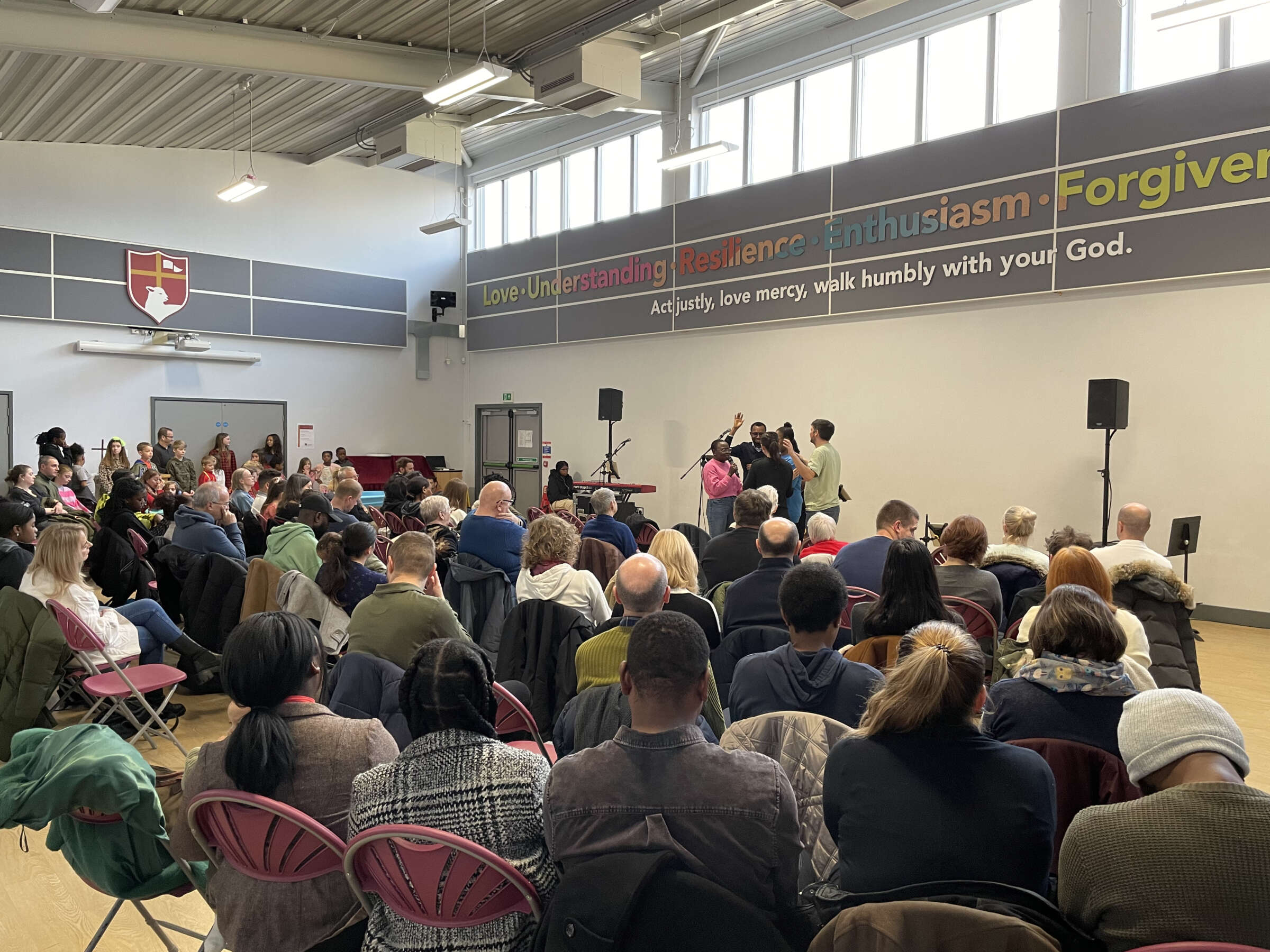
There are over 50 "one another" verses in the New Testament (depending on how you count!) Commands that are simply not possible to obey in isolation. To be truly shaped by the Word of God, rather than the world in which we live, we need to regularly be connected to our fellow believers.
Connect on Sundays
Why do churches gather together weekly on a Sunday? Why not monthly or some other schedule? Gathering weekly is an implicit lesson of creation, the practices of the people of God throughout all of scripture, and all of church history.
God established a seven-day cycle in creation. In the Old Testament, the people of God followed that cycle as a sign of their covenantal allegiance to God. The New Testament church stopped meeting on the Sabbath (Saturday) and almost immediately switched to gathering on Sunday; the "Lord's Day" (Acts 20:7; 1 Cor 6:2; Rev 1:10). And Christians have subsequently met on Sundays for over 2000 years.
It's in the gathering that we are formed as a people. It's in the gathering that we make all of the metaphors of church (body, bride, family, building, etc) become visible.
Ten Reasons why the Church Gathers;
(1) To be obedient to God’s command (Heb. 10:23-25).
(2) To be equipped for the work of ministry (Eph. 4:11-14).
(3) To have our minds renewed through the preaching of the Word (Rom. 12:1-2).
(4) To employ our spiritual gifts for the benefit of the church (1 Cor. 12).
(5) To evangelize the watching world through our love for one another (John 13:35).
(6) To be held accountable by other mature brothers and sisters in the Lord (Acts 18:24-26).
(7) To be discipled by older, godly men and women (Titus 2:2-6).
(8) To ease the mind of your shepherd, so he is not worrying about your soul (Heb. 13:17).
(9) To grow in our faith of the Lord Jesus Christ as we are taught His Word (1 Pet. 2:2).
(10) To be encouraged to persevere in the faith by other believers (Heb. 3:12-14).
Habits to cultivate;
- Attend every week! Attending every Sunday brings glory to God, and helps others and yourself grow. See 7 Reasons Why Faithfully Showing Up Matters.
- Come prepared. Arrive on time (join the pre-meeting prayer meeting!), bring your Bible, pray for the meeting throughout the week.
- Participate. Join in; sing, pray, and engage with contributions. Serve and use your gifts.
- Be friendly. Smile, say hello to people, introduce yourself to new people, look out for those sitting by themselves, assume responsibility for getting to know people, make new friends!
Struggling? Isolation is not the answer. The hardest thing for struggling Christians to recognize is that church is exactly the community they need. So often, they feel it isn’t. Check out this article exploring this topic here.
Faithful church attendance does not earn salvation, nor does it act as a measure to rate spiritual greatness...It does, however, reflect a growing commitment to the gospel, the good of the church community, and spiritual health...Faithful attendance honors Christ and builds up his church. Non-attendance moves in the other direction. It makes light of his name and harms his church in many ways and for many reasons.
- Gerret Kell
Connect in Community
Sundays are great but it's not possible to grow in the depth of relationship that we both desire and need during a 90-minute Sunday meeting. We are both made for and need more.
There are so many benefits to doing life in Community;
- Community helps us grow.
- Community keeps us steadfast and consistent.
- Community provides us with support when we need it most.
- Community enables us to do more than we can alone.
- Community helps us to learn to love.
Habits to cultivate;
- Join a Community. It's in Community that we grow as disciples, family members, and missionaries. It's where we're known and can know others. Join a Community!
- Participate in Community life. Don't just have your name on a list somewhere; attend, participate, pray, love, serve, share and do life together.
- Be intentional. Read Hebrews 10:24-25 and consider how you can best fulfill the exhortation within Community life.
Make new friends
The sad reality is that often, the longer you have been a Christian, the fewer friends you have (for a variety of reasons, not because you are a Christian!) and the harder it is to make new friends. The Christian life is not supposed to be like this!
Consistently looking to make new friends is not only good for people new to the life of the church, but it's also beneficial for you. This is, of course, not to say that you should drop your old friends (far from it!) but, rather, an encouragement to be consistently looking to build new friendships. This is particularly true if you prioritise making friends with people who are not naturally like you, i.e. people from a different stage of life, age, race, culture, nationality, etc.
Making new friends comes naturally to some but for many, is actually quite difficult.
A few tips or thoughts;
- Pray! Have we asked God for close friendships? He cares about us and knows all that we need. It might never have been something we would think to pray for.
- Think biblically about friendship. From Genesis to Revelation we see the story of God’s love and friendship with people. He has always been pursuing us. Will we pursue others with this same love that Christ had for us?
- Be a friend. There are many who are lonely and struggling, longing for a friend and someone to listen. Who can we bless and encourage? Is there anyone that we should get to know? Of course, not every acquaintance or person we help will become a close friend, but some might.
- Take the initiative. Taking a step of faith can be really difficult. Asking someone to meet up for coffee, inviting someone into our home or doing something that we hope will bless someone can take courage. There may be all sorts of barriers, but we need to trust that Jesus will be with us in all our interactions.
- Remember that Jesus is the ultimate friend. It can be difficult to forge true, lasting friendships but as we trust the Lord to help us in this, we need to remember that Jesus is our ultimate friend.

Consider the "One Another" commands.
How can you put these into practice?
Unity. One-third of the one-another commands deal with the unity of the church.
- Be at peace with one another (Mk 9:50)
- Don’t grumble among one another (Jn 6:43)
- Be of the same mind with one another (Ro 12:16, 15:5)
- Accept one another (Ro 15:7)
- Wait for one another before beginning the Eucharist (1 Co 11:33)
- Don’t bite, devour, and consume one another (Ga 5:15)
- Don’t boastfully challenge or envy one another (Ga 5:26).
- Gently, patiently tolerate one another (Ep 4:2)
- Be kind, tender-hearted, and forgiving to one another (Ep 4:32)
- Bear with and forgive one another (Co 3:13)
- Seek good for one another, and don’t repay evil for evil (1 Th 5:15)
- Don’t complain against one another (Jas 4:11, 5:9)
- Confess sins to one another (Jas 5:16)
Love. One-third of them instruct Christians to love one another.
- Love one another (Jn 13:34, 15:12, 17; Ro 13:8; 1 Th 3:12, 4:9; 1 Pe 1:22; 1 Jn 3:11, 4:7, 11; 2 Jn 5)
- Through love, serve one another (Ga 5:13)
- Tolerate one another in love (Ep 4:2)
- Greet one another with a kiss of love (1 Pe 5:14)
- Be devoted to one another in love (Ro 12:10)
Humility. About 15% stress an attitude of humility and deference among believers.
- Give preference to one another in honor (Ro 12:10)
- Regard one another as more important than yourselves (Php 2:3)
- Serve one another (Ga 5:13)
- Wash one another’s feet (Jn 13:14)
- Don’t be haughty: be of the same mind (Ro 12:16)
- Be subject to one another (Ep 5:21)
- Clothe yourselves in humility toward one another (1 Pe 5:5)
Some others:
- Do not judge one another, and don’t put a stumbling block in a brother’s way (Ro 14:13)
- Greet one another with a kiss (Ro 16:16; 1 Co 16:20; 2 Co 13:12)
- Husbands and wives: don’t deprive one another of physical intimacy (1 Co 7:5)
- Bear one another’s burdens (Ga 6:2)
- Speak truth to one another (Ep 4:25)
- Don’t lie to one another (Co 3:9)
- Comfort one another concerning the resurrection (1 Th 4:18)
- Encourage and build up one another (1 Th 5:11)
- Stimulate one another to love and good deeds (He 10:24)
- Pray for one another (Jas 5:16)
- Be hospitable to one another (1 Pe 4:9)
See the whole list in infographic form here.
When it goes wrong
Deep down, at the core of our being, we all have a longing for wholeness. The way we experience this basic desire in our day-to-day lives may be different, but connection is what we are made for.
And yet, we live in a time and place where there is still tension between our true identity as connected beings and the reality of disconnection, pain, and suffering. It’s a time when trust may not be natural and relationships are not always safe. The biblical story reminds us that connection is what we are made for. We will be our truest selves as we meditate on God’s essence as a perfect community of love and find creative and intentional ways to connect with God and others. The biblical story offers hope that despite the inevitable pain of disconnection, living into our true identity as connected beings brings wholeness.
- Carissa Quinn
Rather than backing off (our fleshly, natural instinct), we are called to press in, especially in moments of disconnection and pain. Some questions to consider;
- How can we connect our experiences, good and bad, to the biblical story and find hope within the pages of scripture?
- How can we handle and process the pain of when it goes wrong in a healthy and biblical way? Who might we need to speak to?
- Who might we need to forgive or seek forgiveness from?
- How can we reconcile relationships in a healthy, biblical, and practical way?
Photo by Markus Spiske on Unsplash
Related Resources
Continue reading



Plan a Visit
Ready to experience life at New Community for yourself? We can’t wait to welcome you. When you arrive, someone from our host team will be there to help you find your way around.

More ways to get connected
Whether you're exploring faith or ready to go deeper, there's a path forward for you here.
Listen to Sunday messages
Engage with God’s Word and catch up on any missed messages.
Explore helpful resources
Discipleship content for every stage of the journey.
Get involved in a community
Community Groups are where real growth and discipleship happen.
Join us on Sundays
Our favourite day of the week! Join us in Sidcup or Eltham as we celebrate the good things God has done.

New to church?
Whether you’re just checking us out online or have recently visited one of our Sunday meetings, we’re so glad you’re here.